
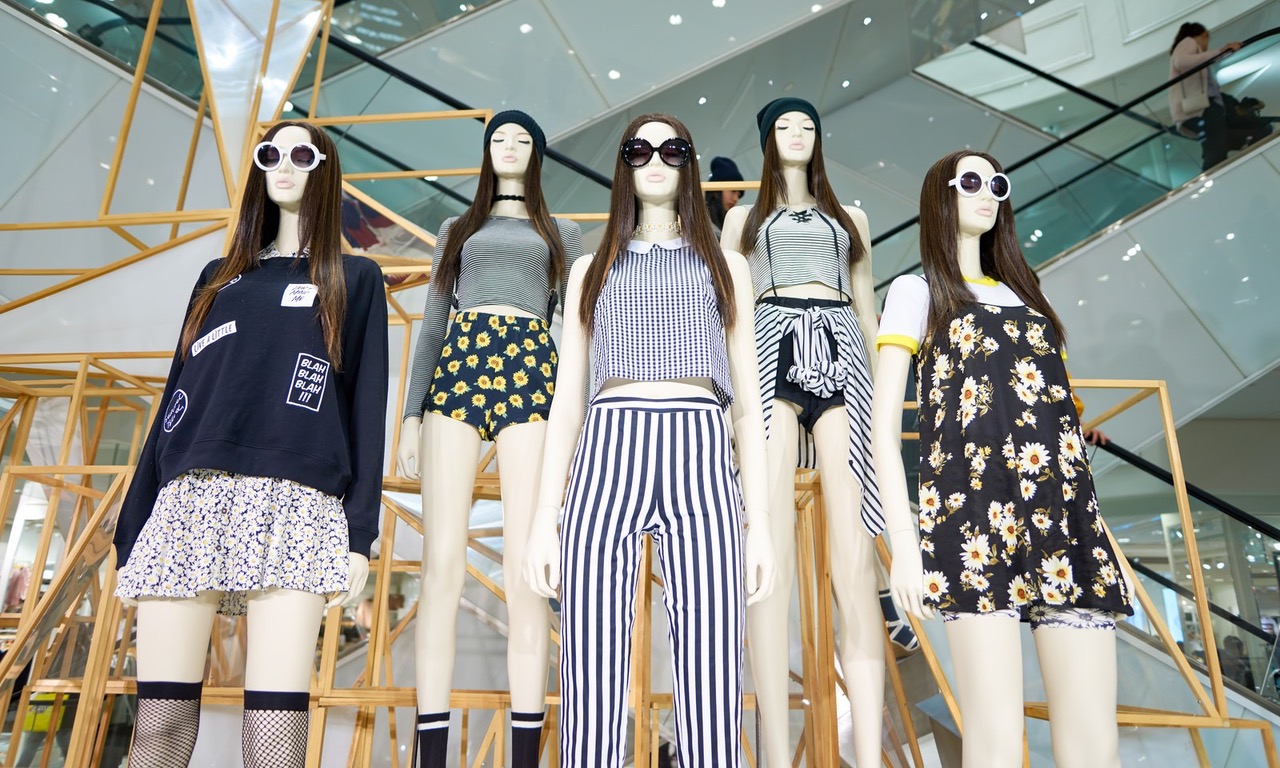
We are all guilty of diving into those sale rails to find ourselves a good bargain. Who doesn’t love a good bargain? Shopping makes us feel good. But as time goes by, we realise we’ve barely worn the items we bought and that we didn’t really need it in the first place. We don’t have any kind of emotional attachment to it and there’s not many memories linked to it so what do we do? We get rid of it and buy ourselves some new clothes.
That is the unfortunate cycle of fast fashion.
Fast fashion is an ever-growing problem that our society is facing right now. It is a big contributor to the many sustainability and ethical problems our beautiful planet is facing. But what exactly is fast fashion?
To put it simply, fast fashion is the process of lots of cheap clothing being made quickly in mass to keep up with new trends. Many of the shops we walk past daily are fast fashion retailers; H&M, Zara, Primark and New Look and many others are all involved with fast fashion practices. They produce lots of new clothing which constantly provides us with new trends.
Zara is one of the world’s leading fast fashion retailers. They have over 2000 stores in 77 countries. Staff produce around 30,000 designs a year, some of which include mirror images of items produced by designer brands at a much cheaper price. When using cheap labour to make their products, Zara tends to use workers in European countries however, some of their garments and products are made in house, so they can monitor the quality of production. Within 3 weeks of designing the garments, products can be seen in store. This is a much quicker turn around with the average in the industry being 6 months. Fashion used to have four seasons where brands bought out new clothing ranges; Spring/summer, autumn/winter and half way between both of these. Zara brings out new clothing twice a week, meaning they have 104 seasons a year!!! They use the idea that items shouldn’t remain warehoused for longer than 72 hours. This way, the products can be in the hands of the consumer as quick as possible. Although it is great for us to have products in our hands that are very similar, if not identical to high end brands at a much cheaper price, it is ripping off those high end designers. They put in months of research to have their ideas stolen. Is that really fair? (1)
Saving the planet is a topic that has largely been in the news recently. The UK has recently declared that we are in a state of “emergency” with climate change. Plastic usage is often highlighted in the news as a big problem to do with climate change and whilst that is true, people often forget that your clothing choices can contribute to climate change. While it may be great and exciting to have so many options of clothing to choose from at such a low cost, it’s important that we know that it’s affecting the environment. It’s not too late for us to make a change.
Here are some facts about the impacts the fashion industry has on the environment.
- 20% of water pollution globally is a result of manufacturing clothing. (WRI)
- It takes around 2700 litres of water to produce the quantity of fabrics needed to produce a single cotton t-shirt. (WWF)
- Fabric dyeing uses a massive amount of water, around 4.9 trillion litres of water yearly. (WRI)
- In 2017, 235 million items of clothing were sent to landfill. (BBC)
- In 2015, the fashion industry produced 1.2 billion tonnes of carbon emissions. (BBC)
- Including the water that it takes to grow the cotton and the manufacturing process, one pair of jeans requires 7600 litres of water to make. (Curiosity)
Not only does fast fashion come with sustainability issues, it also comes with ethical issues. With fast fashion at our doorsteps, it is often easy to forget where these garments have come from and the extremities that companies put their workers through for us to have cheap fashion readily available for us at the click of a button. Many high street retailers use sweat shops. Sweat shops are factories that have poor working conditions, pay extremely low wages and the employees are forced to work long hours, often without breaks. They often use child labour and there have been many incidences reported regarding physical, verbal and sexual abuse. Despite this, not all sweatshops are bad. There are some that pay their workers a reasonable amount and treat them fairly. If sweatshops are utilised properly, they can actually help the developing world by providing income for the country. But more often than not, workers are exploited and that is something that needs to change.
Companies are starting to change and they are starting to become more transparent with their company practices. Small sustainable collections are starting to appear within big brands. H&M are raising more awareness about their conscious collection which uses sustainably sourced fabrics and Zara are promoting their Join Life collection which focuses on “ health, safety and environmental sustainability standards”(2). This is a good start but more needs to be done and it needs to be done now!
So, while you may be over the moon that you managed to find a bargain top for a fiver in H&M or Primark, it is important we know where our clothes came from and what they, and the workers that produce them, have been through. In a later blog post, I’ll be talking about what we can do to reduce the impacts of fast fashion! A sustainable, ethical and happy planet is what we all strive for. If we can reduce the impacts the fashion industry has on the planet, we are a step closer to a more sustainable future. With a few adaptations to our spending habits this is achievable. So, before you make that impulse buy, stop and think. We all have our part to play in making the world a better place.
REFERENCES
- (1) Information on Zara (2011) (https://www.youtube.com/watch?v=qhCM0F81vEg)
- (2) Zara’s Join Life collection (https://www.zara.com/uk/en/sustainability-l1449.html)
- Deborah Drew & Genevieve Yehounme (2017) WRI (https://www.wri.org/blog/2017/07/apparel-industrys-environmental-impact-6-graphics)
- Written by WWF staff (2013) WWF (https://www.worldwildlife.org/stories/the-impact-of-a-cotton-t-shirt)
- Roger Harrabin (2018) BBC (https://www.bbc.co.uk/news/science-environment-45745242)
- Written by Curiosity staff (2016) Curiosity (https://curiosity.com/topics/there-are-2000-gallons-of-water-in-your-jeans-sort-of-curiosity/)
IMAGES
- Image of fast fashion trends in shops (https://remake.world/stories/5-reasons-to-break-up-with-fast-fashion/)
- Image of Zara (https://blog.healyconsultants.com/zero-zara-secret-fast-fashion/)
- Image of H&M’s Conscious collection (https://www.goodhousekeeping.com/institute/a19379/hm-conscious-sustainable-fashion/)
 Becca's Fashion Scrapbook